
Top Things to Do in Ayutthaya
12 must-see attractions and experiences
Ayutthaya is not merely a collection of ruins but the physical ghost of a kingdom. For over four centuries, this island city at the confluence of three rivers was one of the world's wealthiest trading ports, a cosmopolitan capital where Portuguese merchants, Persian diplomats, and Chinese traders walked streets lined with gilded temples. Its violent erasure by the Burmese in 1767 froze it in a state of elegant decay. A first-time visitor should understand that Ayutthaya is best felt rather than just seen. The experience is in the texture of laterite bricks worn smooth by rain, the sight of flame trees shedding red blossoms on broken chedis, and the haunting quiet that settles over the complexes at dusk, broken only by the chirp of geckos. This is a place where history is tangible, lying in fragments at your feet. The modern town wraps around these historic remains, meaning your day will oscillate between the profound silence of the 14th century and the blare of a present-day motorcycle taxi. The local cuisine tells its own story, with dishes like river prawn grilled with salt and historic recipes for boat noodles originally fed to the kingdom's oarsmen. Visiting Ayutthaya requires a shift in pace. It is a place for slow wandering, for sitting on a crumbling wall to watch the light change, and for piecing together the narrative of a fallen empire from its scattered, yet magnificent, pieces.
Hand-Picked Experiences in Ayutthaya
The best of every kind, whatever you're in the mood for
Day Trips Further Afield
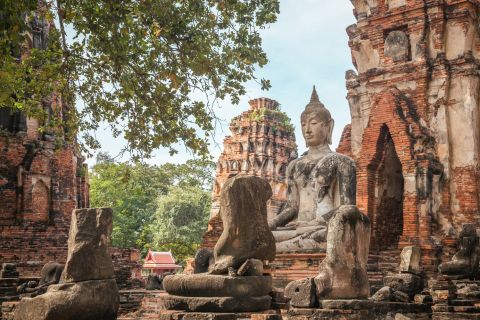
From Bangkok: Ayutthaya & Ayothaya Floating Market Day Trip
A day trip from bangkok visits Ayutthaya and ayothaya floating market.
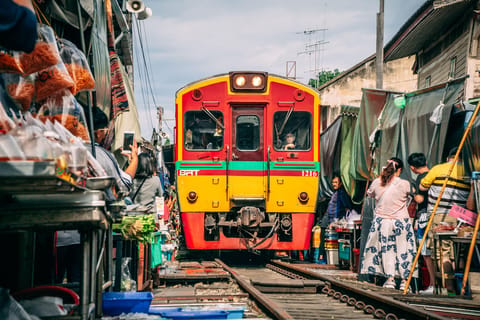
Bangkok: Ayutthaya, Railway & Floating Markets Full-Day Tour
A full-day tour from bangkok covers Ayutthaya, railway, and floating markets.
Culture & History
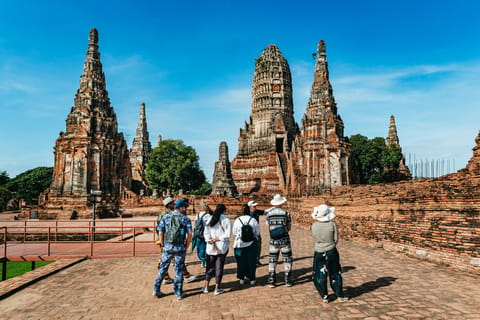
From Bangkok: Ayutthaya Temples Guided Tour with Lunch
A guided tour of Ayutthaya temples with lunch offers cultural discovery.
Insider tip Bring sun protection as temple exploration involves outdoor walking.
On the Water

Private Tour to Ayutthaya, World Heritage Site with Boat Tour
A private tour to Ayutthaya, a world heritage site, includes a boat tour.
Insider tip This full-day tour involves visits to well-known and historically significant temples.
More to Explore
Even more of the best of Ayutthaya

Private Tour to Railway Market, Floating Market And Ayutthaya
Private TourA private tour grants the freedom to tailor your pace, lingering at the impressive sight of a train rushing through the middle of Maeklong Railway Market or bargaining for souvenirs at Damnoen Saduak. The journey culminates in Ayutthaya, where the scale of the ruins becomes palpable as you walk among the toppled chedis.

Thailand's Tour: Kanchanaburi, River Kwai, Markets, Lopburi, Ayutthaya - 3 Days
Guided ExperienceThis multi-day guided tour is for travelers seeking a deep immersion into Central Thailand's history, from the somber railway of Kanchanaburi and the primate-inhabited ruins of Lopburi to the pinnacle of Siamese civilization at Ayutthaya. You'll sleep in different towns, tasting local specialties like river prawn and feeling the cool air of a jungle waterfall, constructing a narrative far richer than a day trip allows.
วัดใหญ่ชัยมงคลวรวิหาร
Cultural ExperiencesWat Yai Chai Mongkhon's most impressive feature is its enormous, bell-shaped chedi, visible from afar across the flat plains of Ayutthaya. Climbing the steep stairs rewards you with a view of a courtyard lined with dozens of saffron-robed Buddha statues, their serene stone faces watching over the complex.
Wat Mahathat
Cultural ExperiencesWat Mahathat is hallowed ground where the well-known image of a stone Buddha head cradled by the roots of a Bodhi tree can be found. The large complex of headless statues, crumbling prangs, and exposed brick foundations speaks of both grandeur and violent demise.
Wat Phanan Choeng Worawihan
Cultural ExperiencesWat Phanan Choeng houses an immense, nineteen-meter-tall seated Buddha image called Luang Pho Tho, covered in gold leaf and radiating a powerful, solemn presence within a dim, high-ceilinged hall. The smell of candle wax and the murmured prayers of Thai devotees fill the space, offering a glimpse into living Buddhist practice amidst the historic ruins.
Wat Phra Si Sanphet
Cultural ExperiencesWat Phra Si Sanphet is defined by a majestic row of three identical, bell-shaped chedis standing like ghostly sentinels against the sky, once the royal temple of the Ayutthaya kingdom and its most sacred site. The scale of the platforms and the symmetry of the structures evoke the absolute power and refined aesthetics of the lost court.
Wat Na Phra Meru Rachikaram
Cultural ExperiencesWat Na Phra Meru stands apart as one of the few major temples in Ayutthaya to survive the 1767 destruction largely intact, allowing you to step inside a pristine, functioning bot filled with beautiful original details. The air inside feels cool and still, carrying the faint, dusty scent of old teak, while your eyes adjust to admire the intricate mother-of-pearl inlay on the doors and a rare, greenstone Buddha image dressed in royal attire.
Wat Lokaya Sutha
Cultural ExperiencesWat Lokaya Sutha's singular attraction is a colossal, forty-two-meter-long reclining Buddha image exposed to the open sky, its plaster-coated brick form draped in a bright orange saffron cloth. The figure's peaceful, smiling face, framed by lotus buds, presents a scene of profound tranquility amidst the grassy field.
Planning Your Visit
Practical tips for getting the most out of Ayutthaya
Frequently Asked Questions
How Much Time Do I Need to See Ayutthaya's Main Temples?
A solid day trip gives you 4-5 hours to cover the big four: Wat Mahathat (with the famous Buddha head in tree roots), Wat Phra Si Sanphet, Wat Chaiwatthanaram, and Wat Ratchaburana. If you want to explore at a relaxed pace, rent a bicycle and budget 6-7 hours, or stay overnight and spread visits across two mornings when it's cooler and less crowded.
What's the Best Way to Get Around the Temple Ruins?
Bicycles are the most popular option, rent one near the train station or your guesthouse for ฿50-80/day and pedal between temples on flat, easy roads. Tuk-tuks charge ฿200-300/hour for a guided loop, which works well in hot weather or if you're short on time. Scooter rentals (฿200-250/day) give you more range but require an international driving permit.
Can I Visit Ayutthaya as a Day Trip from Bangkok?
Yes, it's very doable and a common choice. Trains from Bangkok's Hua Lamphong station take 90 minutes and cost ฿15-20, departing roughly hourly. Minivans from Victory Monument are faster (60-75 minutes, ฿60) but less comfortable. Leave Bangkok by 8am to maximize your time before the midday heat sets in.
Which Temples Charge Admission and How Much?
The six main temples inside Ayutthaya Historical Park charge ฿50 each (Wat Mahathat, Wat Ratchaburana, Wat Phra Si Sanphet, Wat Phra Ram, Wat Chai Wattanaram, and Wat Phra Mongkhon Bophit). A ฿220 combo ticket covers all six and saves you ฿80 if you plan to visit multiple sites. Temples outside the historical park, like Wat Yai Chai Mongkhon, have separate ฿20 entrance fees.
What Should I Wear When Visiting the Temples?
Cover shoulders and knees at all temple buildings with Buddha images inside, sleeveless tops and shorts above the knee aren't allowed. That said, many of Ayutthaya's ruins are open-air with no active worship, so you'll see plenty of tourists in casual clothes exploring the grounds. Bring a light scarf or sarong to wrap around if you plan to enter any chapel halls.
Is Ayutthaya Worth Visiting in the Rainy Season?
The ruins are beautiful from July to October when everything turns green. But afternoon downpours are common and can make biking messy. Wat Chaiwatthanaram and other riverside temples occasionally get minor flooding during peak rainy months (September-October). If you go, start early, finish temple visits by 2pm, and pack a rain jacket, crowds are lighter and hotels are cheaper.
Where's the Best Place to Watch Sunset Over the Ruins?
Wat Chaiwatthanaram, on the west bank of the Chao Phraya River, is the classic sunset spot, its Khmer-style towers look impressive in golden light. Arrive by 5:30pm to claim a good angle (it gets crowded). Wat Phra Ram, near the center of town, is a quieter alternative with a large pond that reflects the prang beautifully in late afternoon.
Are There Any Good Local Restaurants Near the Historical Park?
Baan Kao Nhom, just off Naresuan Road near Wat Ratchaburana, serves excellent boat noodles and grilled river prawns in an old wooden shophouse (mains ฿60-120). For something fancier, Malakor Kitchen & Cafe on U Thong Road does refined Thai dishes in a restored heritage building with air-con. The Chao Phrom Market night stalls, southeast of the island, are your best bet for cheap, authentic street food after 6pm.
What's the Deal with the Elephants at Some Temples?
You'll see elephant rides offered near Wat Phra Si Sanphet and other popular temples for ฿200-400 per person. Most animal welfare groups advise against it, the animals are often kept in poor conditions and overworked in the heat. If you want an ethical elephant experience, visit Elephant Nature Park (90 minutes north near Chiang Mai) instead; Ayutthaya has no accredited sanctuaries.
Is It Safe to Bike Around Ayutthaya at Night?
The main roads around the historical park are well-lit and safe until 10pm or so, and locals bike everywhere. That said, some temple grounds close at 6pm and aren't lit, so stick to populated streets after dark. The area around Chao Phrom Market and U Thong Road has the most evening activity if you want company while riding back to your guesthouse.
Should I Stay Overnight or Is a Day Trip Enough?
A day trip works if you're focused on the top temples and don't mind a rushed pace. Staying overnight lets you visit at sunrise (nearly empty, cooler, better photos), explore the night market, and see Wat Chaiwatthanaram at sunset without worrying about the last train. Guesthouses near the island start at ฿300-500/night and are easy to book same-day except on Thai public holidays.
Explore more experiences in Ayutthaya
Browse live availability and pricing.
Didn't see anything interesting yet?
Browse Viator's full catalog of tours, day trips, food experiences, and private guides in Ayutthaya.
See All Ayutthaya Tours on ViatorReady to plan your trip to Ayutthaya?
Now that you've got the research covered, here's where to go next.